
Covering prison systems is difficult work for journalists. There are seemingly insurmountable challenges, not the least of which is access to sources. The work requires interviewing people who are literally behind bars. They are often sensitive sources, as well, who take risks to speak with journalists about their stories and the conditions under which they’re living. Their movements and communications are monitored and restricted, and they may be subjected to retaliation for what they disclose. But Joseph Neff said the biggest challenge about the beat is engaging the public.
Neff, an investigative journalist at The Marshall Project, said that most people believe prisoners are guilty of a crime and get the treatment they deserve. “I think that there’s apathy or indifference to what’s going on in prisons, which is not good in the long term,” he said.
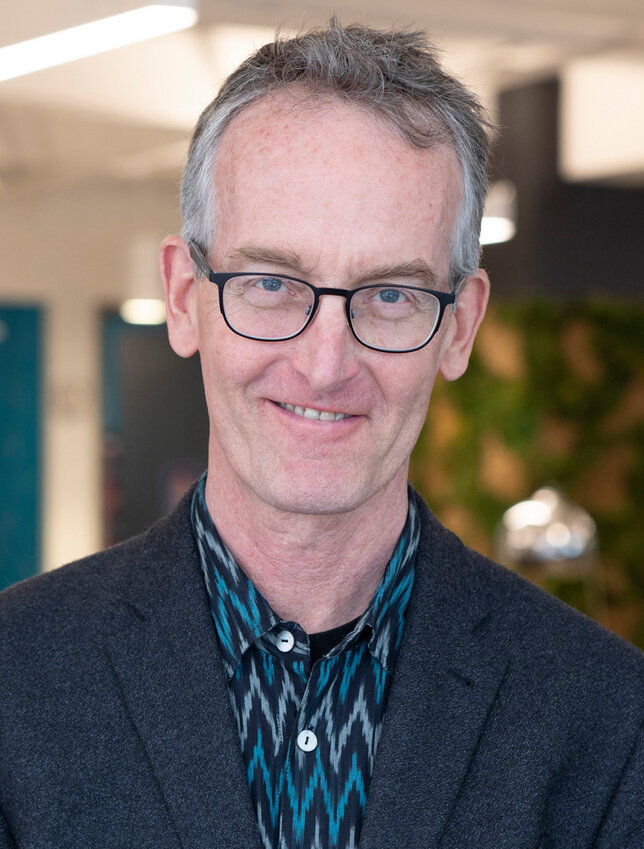
Neff joined The Marshall Project in 2017 after working as an investigative reporter for about two decades at The News & Observer in Raleigh, North Carolina. There, he reported on a case of an innocent man on death row, and saw an impact when state law changed to prohibit prosecutors from withholding evidence in all felony cases. While at The Marshall Project, he produced a 2019 series about Mississippi prisons, beginning with a story about a facility so understaffed that gang leaders were tasked with controlling prisoners in their block.
He hoped his reporting would be impactful, but nothing changed. He then reported on the high rates of violence against prison guards in the Mississippi prison system. Still, he did not see an impact.
Then, he learned that the company managing the prison system was profiting from the worker shortage. Fewer staffers were reporting to work than the contract required, but the state continued writing checks to the company, paying the full salaries of absent workers. After his reporting on ghost workers, a state auditor ordered the prison company to pay back $7.4 million to taxpayers.
In 2021, Neff and his colleagues won The Goldsmith Prize for Investigative Reporting and The Collier Prize for State Government Accountability for their work on the Mississippi prison system.
A firsthand perspective
In Texas, Keri Blakinger began covering the criminal justice system in 2017. She was a general assignment reporter for the Houston Chronicle when her editor suggested she pick up a side beat covering death-row cases, and Blakinger agreed.
The newspaper’s previous death-row coverage focused on executions and legal wins and losses. Blakinger brought a different perspective to the reporting. Blakinger was herself incarcerated for 21 months, having been sentenced to prison for a drug-possession charge in 2010, when she was a senior at Cornell University.
Blakinger strives to meet incarcerated sources where they reside. “I actually went to death row and visited the guys. I wanted to talk to them and learn more about the conditions there,” she said.
Speaking with E&P about her professional experiences, Blakinger explained that she understands the “shorthand” and context of her sources’ experiences in prison.
“I think it was really helpful that I had an understanding of the basics of how that world works,” she said. “There’s just ways that people talk; there’s slang they use … and I would understand that language. But also, I could understand what it’s like to be living through things that they’re describing to me.”
For Blakinger, the side beat evolved into a full-time focus. She was later hired by The Marshall Project, and she now works as an investigative reporter for ProPublica. In 2022, she published “Corrections in Ink: A Memoir.”
Working with sensitive sources
It is not uncommon that incarcerated people suffer retaliation for speaking with journalists or the information they share. The three journalists E&P spoke with for this article said they’ve had sources punished for giving them information.
“They’re inside concrete walls and behind barbed wire, and it’s really challenging for them to get the news out without getting in trouble,” Neff said.
Blakinger said the high rates of intellectual disabilities and mental health problems among incarcerated people create a “very distinct” ethical issue when it comes to determining whether sources understand the risks of being named in a story. “They’ve lived their entire lives in rooms that look the same — cells. They’ve lived decades in that same space,” she said. “Time is all just sort of a flat circle at that point.”
Blakinger noted that solitary confinement, in particular, affects memory, because chronology is often tied to visual context. For a journalist, this adds some extra layers to interviewing and factchecking.
Nearly a decade ago, Blakinger was interviewing a source who mentioned playing the card game “Magic: The Gathering” in prison. That caught her attention, since games weren’t available in the commissary. She learned that the players made their own cards, and that the game “Dungeons & Dragons” — a fantasy role-playing game — was popular with death-row inmates.
In 2020, she began reporting on a story about gaming culture for death-row inmates, but the COVID-19 lockdowns complicated the already challenging reporting conditions. Texas does not allow death-row inmates phone calls with reporters, so her options were limited to in-person interviews and the U.S. mail. At the time, she could send messages to the inmates online, but they could only reply by postal mail.
“Which is a terrible way to interview someone,” she said. Later, the rules changed, and inmates were able to reply to e-messages.
Death-row visitation rules also limit visits with any one person to one hour every 90 days. “Also a nightmare for trying to do something as lengthy and in-depth as a magazine feature,” she said. It took three years to report the story, “When Wizards and Orcs Came to Death Row.” It was a 2024 finalist for the Pulitzer Prize in Feature Writing. Blakinger also co-produced a short documentary from death row, “I Am Ready, Warden,” which was nominated for a Best Documentary Short Film Oscar in 2025.
Her reporting on disciplinary case quotas in Texas had measurable impact. It led to a state audit and the elimination of those quotas. She also reported on the poor quality of food in Texas prisons and toothless Texas inmates without dentures — two issues that the Texas Department of Criminal Justice included as matters to address in its 2030 plan.
While Blakinger found her work for The Marshall Project “deeply fulfilling,” she said the “sheer volume” of prison mail she received was at times overwhelming because she knew that only a small percentage of letters from people seeking her help could become stories.
“Checking my prison mail is sort of dipping one toe into this unending sea of desperate need, so I think sometimes that feels really overwhelming,” she said. “And maybe more so to me, because it feels a little personal, because I understand too well the impact of the things they’re describing.”
Reporting from inside
.jpg)
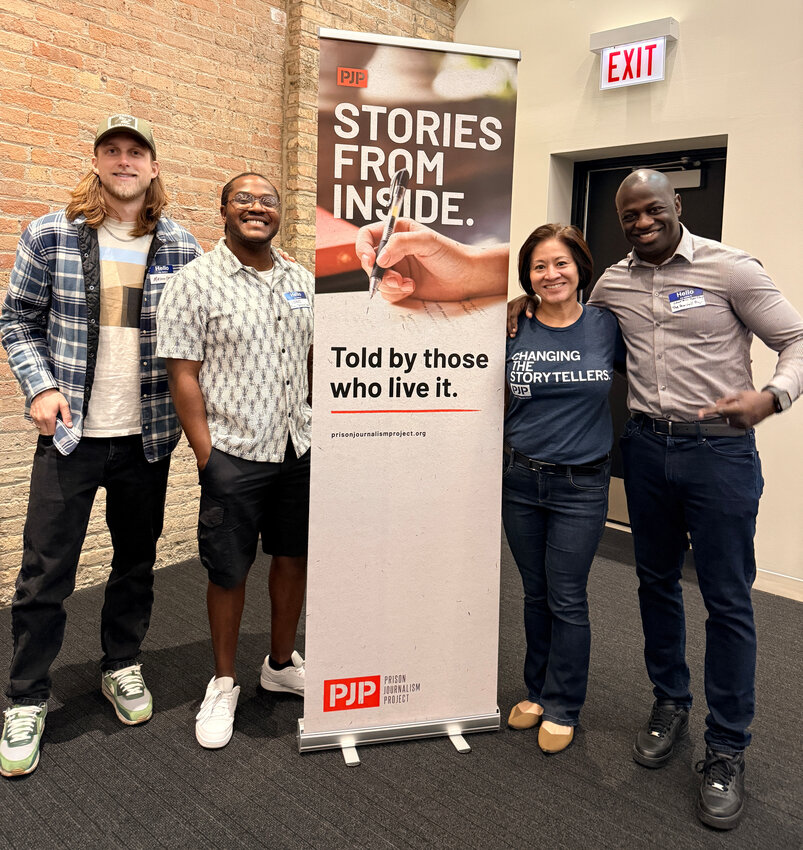
Yukari Kane, co-founder and CEO of the Prison Journalism Project, said that prison journalism exists in a “murky space” of First Amendment protection.
The Prison Journalism Project trains incarcerated journalists and provides a platform to publish their stories. Staff work with incarcerated writers so they understand they could be subjected to retaliation for their reporting. But informed consent doesn’t prevent that retaliation. Kane referenced a recent incident of an incarcerated journalist, Taira Beller, who was punished for producing an investigative piece about the conditions for women in Kentucky prisons versus their male counterparts. In one case, she wrote about a policy requiring the women to wear bras, yet the prison system failed to provide the women with garments that fit.
Before launching the Prison Journalism Project in 2020 with co-founder Shaheen Pasha, Kane wrote about technology for The Wall Street Journal and Reuters. She also wrote a book, “Haunted Empire: Apple After Steve Jobs.” The day her book launched, she learned she was in late-stage kidney failure and needed a kidney transplant.
“So, that set in motion a lot of things, and long story short, I left daily news and started teaching at UC Berkeley,” she said. While teaching at the Graduate School of Journalism, a friend asked if she would be interested in teaching at the San Quentin State Prison, where incarcerated journalists produce their own newspaper.
“I wanted to bring out stories that wouldn’t be told otherwise,” she said. Through that role, she met Pasha, who was teaching at The University of Massachusetts Amherst and had launched a journalism class at a county jail in Massachusetts.
“I think there’s something about life in prison that is very difficult to capture completely without being in the system,” she said.
Kane said she sees her role and that of her colleagues at the Prison Journalism Project as “producers.” A recent project about extreme heat in prisons required interviewing 100 incarcerated journalists about their firsthand experiences. “Each person who contributed provided a snapshot, but together, they provide a national perspective on what the situation is like right now,” she said.

Kory McClary, a journalist incarcerated in New Jersey, wrote about his experiences living in a cell below a mentally ill person. He documented the man’s deteriorating mental health, and eventually, his death. To intentionally and sensitively tell the story, the Prison Journalism Project partnered with MindSiteNews, a nonprofit news organization covering mental health in America. The project was co-published with The Guardian.
Kane said the Prison Journalism Project aims for “constructive journalism.” They don’t name guards or administrators, and they avoid singling out specific facilities, because they want their stories to yield broader “system-level” changes.
“It’s not about contributing to polarization,” she said. “It’s about bringing people into the room — all people — to be thoughtful about how the system can be better, more humane, more just.”
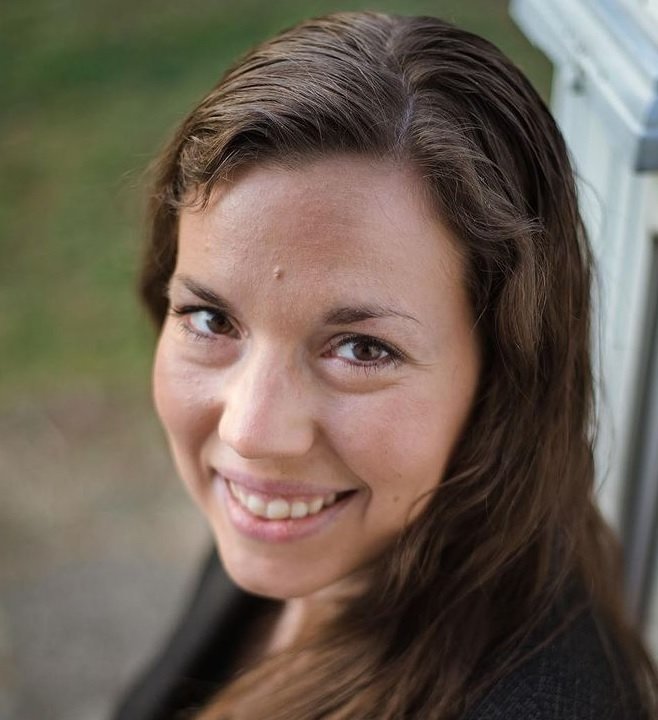 Alyssa Choiniere is a freelance journalist based in southwestern Pennsylvania. She is writing a nonfiction book for Rutgers University Press, “Be Home Before the Streetlights Come On: The Political Hijacking of Child-Trafficking Terror.”


Comments
No comments on this item Please log in to comment by clicking here