
Like his parents, Aymann Ismail planted roots in Newark, New Jersey. His are more literal. On an overcast mid-September weekday still lingering in summer's humidity, Ismail admired the homegrown veggies sprouting in his backyard.
For someone who spent most of his life in Newark, Ismail often ventures outside his comfort zone. It started early — after 9/11, the Islamic school he attended suspended operations, and he ended up in the public school system as the first Arab American kid his classmates likely ever met. In 2017, Slate Magazine launched the online video series “Who’s Afraid of Aymann Ismail?” The Egyptian American staff writer went across the country, visiting the homes of alt-right bloggers and fielding ignorant questions on whether he practices Shariah Law, all to tackle age-old stigmas plaguing Muslims across the nation head-on.
Ismail leapt at the opportunity to head the Arab and Middle Eastern Journalists Association (AMEJA) early this year, despite only joining the affinity group in 2021. He still feels like a fresh face in the organization, which dates to 2005 and connects Middle Eastern and North African (MENA) and Southwest Asian and North African (SWANA) media professionals from almost every major American newsroom.
Slated for leadership
Journalism wasn’t originally in the cards for Ismail. A thorough Jersey boy, he attended Rutgers University's art school. He got his hands on a fancy new camera in college, gaming Canon’s exchange policy by trading in a broken model he bought for pennies on the dollar off Craigslist.
“I got this camera that everybody wanted for really cheap,” said Ismail. “I was the only kid on campus who had a camera that could shoot video. I came across this newspaper — a daily paper that paid [for videos]. That’s why I wanted to make money, practice and create videos, which wasn’t possible in art school. I became the founding multimedia editor…I got it down to a science, and that gave me the foundation for where I am today.”
He ultimately fell in love with journalism’s storytelling process and felt duty-bound to bridge his Arab and American worlds. Ismail points to growing up in the greater New York City metro during 9/11 as a formative experience, recalling how his father returned home from a Manhattan cab shift covered in dust days after the attacks.
Today, he’s a decade into his work at Slate (as well as an accomplished book author), with a vast portfolio for reporting on the “disconnect between how Arabs and Muslims see themselves vs. how they’re often portrayed in media.”
A few years back, Ismail discovered AMEJA after a connection suggested he attend the organization’s award ceremony. Of course, he brought his camera and felt immediately at home. “In that moment, I met more Arab and Middle Eastern journalists in one night than I had ever met in my entire career,” he recounted. “I immediately felt like I’d found my tribe.” AMEJA elected Ismail to the board last year and as the organization’s president earlier this year.
Building a community
Joining AMEJA for the community remains a common thread. Christin El-Kholy, a Toronto-based editor for New Lines Magazine, joined the organization after pursuing a later career change into journalism. She long considered herself a “media critic” on how underrepresented non-white reporters were. Working in the industry only reinforced those feelings.
“Being on the inside was even more jarring,” said El-Kholy. “Whatever illusions or ideas like ‘I’m not really in there, so I can be a critic from the outside, but maybe things are different’ were instantly shattered throughout my J-school experience. It coincided with hearing about AMEJA and feeling like what a great thing exists where other people might relate to how I feel, or at the very least, I can be in community with other people who share this identity.”
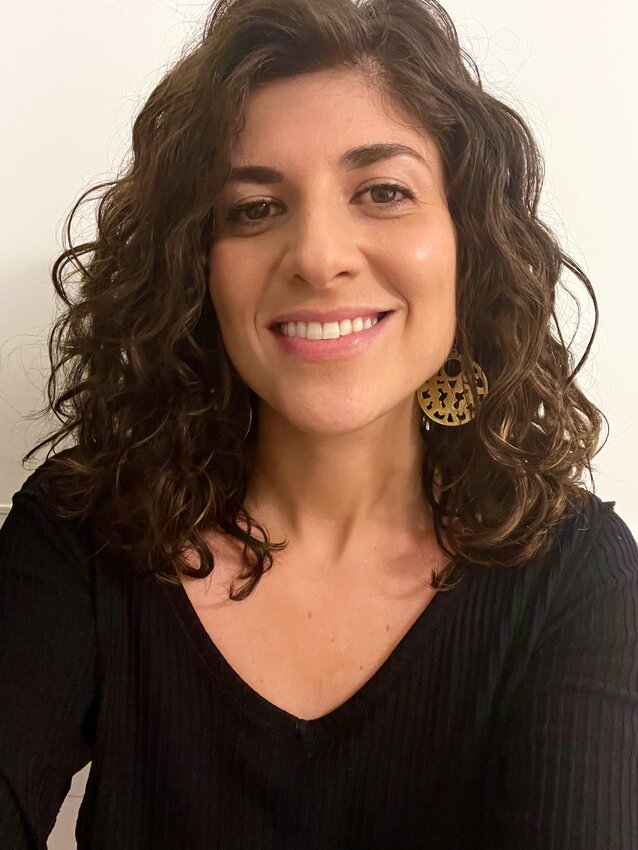
Leyla Doss, a recently elected AMEJA board member, first joined the organization by serving as co-president for the student chapter at Columbia Journalism School. She later joined the national chapter after graduating and remains in New York City.
“The other people felt the same way about the institutionalized racism against Arab and Middle Eastern journalists and journalists of color in general within the media industry,” said Doss. “It just became a way for us to have a community and social events. It just felt like I had a space where I could just be myself and we could vent.”
AMEJA also became a safe space for Middle Eastern journalists to talk candidly about Gaza with their peers, particularly after the Oct. 7 attacks. Some felt their newsrooms treated their racial and ethnic identity as a presumptive bias when covering Palestinian issues. Others feared they were jeopardizing their newsroom positions for speaking out against the Israeli government, whether for demanding protections for fellow Middle Eastern journalists in Gaza or echoing human rights commissions in using the “g word”: genocide.
Last month, AMEJA released survey results from roughly 70 members working in newsrooms after the Oct. 7 attacks. Eighty-five percent of respondents believed their reporting on the MENA region is held to higher standards of neutrality, and 75% recalled self-censoring themselves to avoid backlash. Roughly 65% did not feel safe expressing their personal views over social media or internally.
A delicate balance remains for AMEJA as a professional association. Some members, like El-Kholy, openly protest and organize for Palestine. “This is something that’s built into my ethos, my worldview, my everything.” But she understands not everyone can or wants to speak up in AMEJA. “No one's going to agree about how we should all respond to something like a genocide,” El-Kholy adds.
Yet even the standard organizational practice of issuing statements demanding press freedom can seem like an act of advocacy from AMEJA when only a handful of other industry groups feel comfortable openly condemning the Israeli Defense Forces (IDF) for killing journalists until recently.
Ismail said some members lost dozens of family members to the IDF. “One of the hardest things that could happen to somebody is losing a loved one,” he added. “It’s even harder when you’re reading about them being described as collateral damage or a necessary evil to wage war.”
With some Palestinian, Iranian, Lebanese and Yemeni members balancing tight deadlines with checking in on family members, mental healthcare became a key organizational priority. There’s also a need for support for Sudanese members, as the North African nation faces what the United Nations calls “the most devastating humanitarian and displacement crisis in the world.” AMEJA offers mental health check-ins and workshops, which Ismail said the organization plans to increase in the upcoming year, but believes newsrooms should also cover the costs.
No amnesia for AMEJA
As Ismail faces AMEJA’s future, co-founders Mahdis Keshavarz and Jamal Rayyis offer a glimpse into the organization’s past. They credit the late Walid El-Gabry as the driving force behind establishing AMEJA. The son of an English mother and an Egyptian father, El-Gabry boasted a respected business journalism background and first arrived in New York City from London thanks to a Financial Times transfer during the early-to-mid 2000s.
“In that post-9/11 climate, it became abundantly clear that the way we were being reported on and the presence of Middle Eastern people in the newsrooms was lacking or underappreciated,” said Keshavarz, who currently serves on AMEJA’s board. “Walid really took that as inspiration [and] an opportunity for those of us who are working in media to band together and establish a formal organization to pursue our interests, our representation and our presence in the newsrooms.”
El-Gabry first met Rayyis at a networking event, where they discussed their frustrations with the limited American media perspectives on their communities. They became fast friends. El-Gabry believed the solution was more representation in positions of influence within the industry.
“The idea was that it didn’t matter necessarily what we were covering,” said Rayyis. “This idea that there were people who had certain levels of authority in the newsrooms could, in some ways, help direct coverage, or make coverage more sensitive to areas of the world that were important to us. Or maybe offer perspectives that editors may overlook.”
Rayyis, now a freelance gastronomy writer, recalled working as a New York Times news assistant when Israel and the Palestine Liberation Organization agreed to the Oslo Accords in 1993. “The editors thought that they needed three days of stories interviewing Jewish Americans about their perspective on all this,” he recalled. “They didn’t think about interviewing Arab Americans.” That was until Rayyis and a Jewish colleague suggested it — leading to interviews with scholar Edward Said and a few others.
Keshavarz initially remained at arm’s length due to her communications background. Despite having formal journalism experience, she has primarily worked on the other side of the profession and often represents social justice causes.
After 9/11, Keshavarz served as a media spokesperson for all the Guantanamo Bay detainees. We now know how the United States denied her clients due process and subsequently tortured them. But Keshavarz’s attempts to draw attention to those violations when they occurred were met dismissively and resistantly by respected journalists. And such hostilities weren’t reserved for just those in military detention — everyday Arab and Middle Eastern Americans faced mistrust, racial profiling and surveillance.
“You knew this was happening in your community,” said Keshavarz. “And you knew because it was happening to aunties and uncles that you had grown up with, community centers that you’d been to, and people that you’ve known most of your life. And yet they’re being accused of these horrible things, which fundamentally and instinctively you know aren’t right.
“When you’re going into a newsroom to justify the reason why [by saying] ‘I’ve actually been part of this community,’ suddenly the tables would get turned and you’d be viewed with suspicion or discredited as not being credible enough to tell the story — because now you have too close a proximity. As opposed to having insight, it became that you have bias.”
AMEJA sprung up from challenging those narratives. The co-founders began recruiting media professionals, and Rayyis held the first meeting in his office. Such meetings became a weekly occurrence, and the organization grew over the next few months, bolstered by merging with the nascent Iranian Journalists Association.
Networking events followed, as did panel discussions and book talks. But organizing mixers could be challenging. While the time-honored tradition of journalism drinking buddies persisted in the profession, AMEJA’s sizable Muslim membership meant some bars needed extra convincing to host events where club sodas would take up much of the tab.
A labor of love
However, the initial spark behind AMEJA eventually faded as members became wrapped up with new responsibilities. The organization relied exclusively on volunteer efforts throughout its history, with Ismail only recently hiring the first paid employee: a part-time newsletter writer.
El-Gabry stepped back during the 2010s, and the organization fell largely dormant beyond the occasional reporting guide or contact list. But the original board members stuck around and continued meeting semi-regularly, keeping the organization afloat despite inactivity.
Rayyis remained in frequent contact with El-Gabry throughout the years and saw him just days before he passed from stomach cancer in 2018. “Several people on the board showed up to his memorial,” he said. "And we were talking [about how] we really need to give [AMEJA] one more big push just for Walid’s legacy. We all decided that this was worth preserving.”
In fact, they decided to grow AMEJA. So came the organization’s second act. New members with fresh ideas came in. AMEJA received grants and began charging membership dues. Suddenly, the co-founder’s early ideas no longer needed to be just ideas. For example, their ambition for a robust mentorship program is now underway, with more than 120 pairings to date.
Doss took advantage of the program as a mentee. She’s no journalism rookie, covering the 2011 Egyptian uprising on the ground and co-founding Mada Masr, Egypt’s last remaining independent newspaper, on her resume. Yet such experience is often underplayed by American newsrooms, even as Western reporters regularly make a name by parachuting into the Middle East. “AMEJA made such a huge difference for me as someone who’s an actual immigrant, didn’t grow up in the States, and had a really tough time navigating the industry,” said Doss.
In the future, Ismail envisions doubling or even tripling membership numbers, leveraging AMEJA’s size to ensure large news groups recognize the need for Middle Eastern journalists. He’s recently updated the website and is reviving the awards ceremony, which will take place in November after a one-year hiatus. Ismail also intends to publish more reporting guides and update the one on Israel-Palestine.
Still, he’s aware of the burnout his predecessors faced. AMEJA consumes a significant amount of his time. Ismail said he’s already taking steps to prepare the next generation — once again planting new roots. For now, though, he’s content.
“In the broader scope of things, this is probably the second most gratifying thing I could do with my time, beyond taking care of my kids and taking them out to the library. The next best thing I could do with my time is look at the next task on the plate of AMEJA,” said Ismail.
 Tandy Lau is an award-winning journalist currently based in Jersey City. He currently works as a staff reporter covering public safety for the New York Amsterdam News in Harlem. He can be contacted at tandylau1995@gmail.com





Comments
No comments on this item Please log in to comment by clicking here