
The past few years have been marked by an exodus of sorts — the departure of prominent “mainstream media” journalists from major-market newspapers, as well as network and cable TV news. Some left on their own accord, while others were forced into the next career chapters by layoffs, buyouts and firings. Faced with the question, what comes after a long career in traditional news, they forged a new path into digital spaces, exploring newsletters, video and audio, streaming and podcasting. But how have they fared as they navigated the transition from being a member of a newsroom to being both reporter and chief executive of their brands? And what happens when the independent-journalist market becomes more crowded and competitive?
“In my case, the overwhelmingly positive part of it is that you have a closer relationship with your readers,” said Brian Merchant. He was reflecting on his time working in legacy and early-digital media, and now as an independent journalist. “I am very fortunate to have a wonderful community of commenters and readers and folks who participate in a sort of discussion. … You can also get great tips, feedback and new ideas.”
Merchant has had an illustrious career in journalism, reporting on tech for VICE News, The New York Times, WIRED, The Atlantic, Fast Company and other major news brands. He was a technology columnist at the Los Angeles Times but was laid off in 2024.

He’d started a Substack newsletter named for his book, “Blood in the Machine: The Origins of the Rebellion Against Big Tech,” published by Little, Brown and Company in 2023. He launched it at the suggestion of his publisher, to promote the book. When he was laid off, it was a natural place to start writing.
“In a lot of ways, it was an extension of the column that I was writing at the time. … There was so much to say, so much ground to cover, so much that I felt wasn’t being particularly paid attention to elsewhere as the AI moment took root,” he said.
Merchant found the independent route compelling because he could “call the shots” on what he’d write and have a more direct relationship with the audience. Fortunately, he had a loyal following — fans of his columns and books, and social media followers — and they followed him to Substack.
“I think it’s a lot harder for folks earlier in their career, when this newsletter approach is maybe more of a gamble,” he said.
As an independent journalist, you can’t rest on any laurels. Beyond the reporting, there’s the business side: time management, revenue generation, marketing and promotion, innovation and audience development. He faces dilemmas, like when to do a promotion, what content to put behind the paywall, when and how to appeal for paid subscriptions. Should I do more audio, more video?
“I found that you have to continually work at it,” he said. “You have to continue to do your best work and do it consistently, and make some noise to keep the thing growing. … And you have to rethink your approach to making a living as a journalist.”
On Substack, he unveiled a paid-subscription model about a year ago. He found it important to diversify his income.
“I give talks, and I do a little bit of freelancing,” he said. “There’s some income from the books, but by and large, the vast majority of my day-to-day revenue is my income from this newsletter.”
“The upside is that you have complete editorial independence,” Merchant said. “You have the relative freedom to write about what you’d like, with one caveat being that you shouldn’t stray too far, because your readership might get annoyed and revolt.”
Merchant sees “headwinds” ahead for independent journalists.
“As more journalists lose their homes at legacy publications, where they’re on staff at newspapers, magazines or websites, then inevitably more of those folks are going online and trying newsletters and starting indie pubs. And more power to them,” Merchant said. “But it does mean that the market is more saturated, and maybe it starts getting harder to get the same numbers of paid subscribers to support your work, because you’re vying for a slice of the same pie. That’s one of the real challenges. … It always helps to have gotten there early.”
Creative and independent

From the start of her journalism career, Taylor Lorenz had her sights set on digital spaces and new-media culture.
“When I came of age, my dream — because I was a millennial — was to work at BuzzFeed News. … What I liked about places like that was that they combined traditional reporting with a digital mindset,” Lorenz said.
She got her professional start as a blogger before taking her talents to The New York Times, where she reported on tech, and The Washington Post, where she wrote a column about tech and online culture.
Perhaps it was serendipitous that Lorenz rebooted her blog and podcast about five months before her tenure at The Washington Post came to an end. She’d come under fire for sharing a social post that referred to then President Joe Biden as a “war criminal.” Not long after, her editor, Mark Seibel, retired, and Executive Editor Sally Buzbee resigned. Lorenz felt it was the right time to strike out on her own.
On Substack, she immediately gained more than 50,000 new subscribers, and her YouTube followers went from 10,000 to six figures.
“I have my YouTube [channel], my podcast, my [UserMag.co] newsletter, which I put out on Substack and Patreon. And then I have my social media channels, like Instagram and TikTok. … When you’re an independent, you have to be everywhere. You really have to cast a wide net, because you’re just trying to reach as many people as possible, and I try to spend a lot of time cultivating that audience,” said Lorenz.
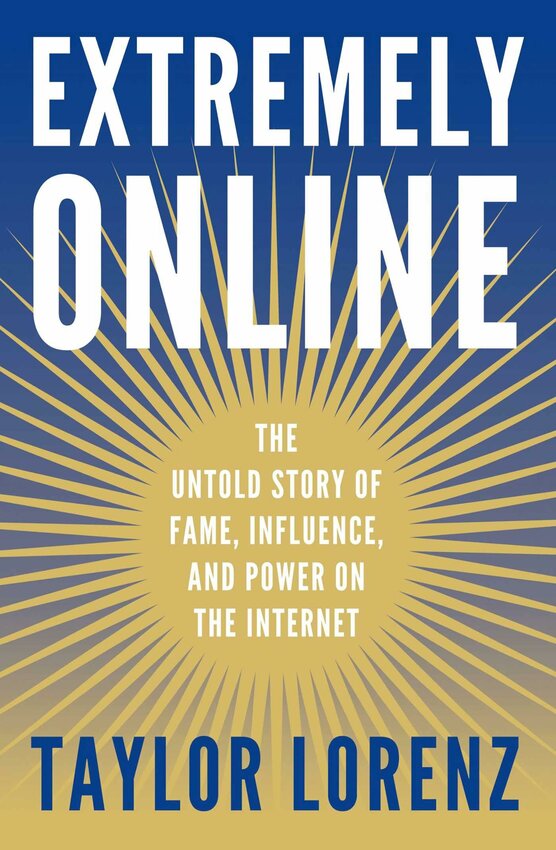
She continues to freelance for major titles, such as Vanity Fair, Rolling Stone, The Hollywood Reporter and WIRED. Tech reporters are in high demand, she said.
Her YouTube channel derives revenue from programmatic advertising.
“I try to generate subscription revenue with my Substack, but now that Substack has gotten very saturated, my subscription revenue has been down. I’m moving more into advertising and seeking to work with advertisers. I’m exploring the potential to do sponsored content. So, it’s just a matter of figuring out where those boundaries lie. Because I am still a journalist, and I still write sometimes for mainstream outlets, I’m pretty strict about my ethics policies.”
Being an independent journalist allows Lorenz to explore opportunities in straight news and opinion. “I have that flexibility,” she said. “I did an investigative piece for WIRED about a year ago that was fully in the news section. I can kind of bounce back and forth, whereas that was harder to do in my legacy media career.”
Reporting from center court

Marc Stein got his start in news back in high school, working at a community paper. It kicked off a remarkable career that’s taken Stein to The Dallas Morning News, ESPN, the Orange County Register, The Washington Post and San Bernadino Sun. From October 2017 to June 2021, he covered sports for The New York Times.
Stein was in the midst of covering the NBA finals when E&P corresponded with him and asked about his current role as an independent journalist. He now publishes “The Stein Line” on Substack. Being an independent journalist has opened up opportunities for podcasting, plus appearances and co-host spots on radio and TV shows.
But it wasn’t an easy decision to leave The New York Times.
“I absolutely loved working at The New York Times. I’m a newspaper nerd,” Stein explained in an email. “Being printed on those pages meant more to me than words can say. Even after 30-something years in the business, when I had a story in the print version of the Times, I always bought two copies at a supermarket near me, where I live in Dallas. I was that excited to see my byline even after all these years.
“But it’s also true that the rise of newsletters over the past decade-ish gradually tempted me more and more. I found myself studying successful newsletters and watching independent publishers with envy and asking myself constantly: Could I do this? Could I make it on my own? It got to the point where I simply had to try it.”

He gained some experience writing for a newsletter audience while at The New York Times. There, he was part of a newsletter team. At The Stein Line, it’s just Stein and contributor Jake Fischer.
“When I was studying up for making the leap, I remember reading a line from Kara Swisher in an interview somewhere that captured the state of play perfectly. I’m not sure that I have the quote to the letter, but she said something to the effect of: ‘I’ve made a lot of stuff for a lot of people. Now it’s time to make what I want to make.’ That pretty much summed up how I saw it,” Stein recalled.
“Independent publishing is so much more personal than what you do for traditional outlets,” he said. “You’re encouraged to take the audience with you as much as possible in your reporting and coverage. I loved those concepts.”
In five years, The Stein Line has amassed an audience of roughly 48,000. One of the challenges he’s faced is getting that number higher.
“I’ve never been able to figure out why I can’t get my overall number higher when a free subscription to The Stein Line only requires an email. I also never figured out why tweeting out a link to my Substack sign-up page, as I used to very frequently, didn’t lead to more free sign-ups. There is still a lot of mystery at play and constant learning to do as an independent publisher,” he wrote. “Which is why I’m incessantly studying other successful newsletters. It’s fascinating to see what work for them and to try to figure out if they are doing something smart that I’m not.”
Asked to reflect on the differences in his career from his years working for ESPN and major-market newspapers versus the past five years as an independent journalist, Stein said: “A zillion things, really. Not having reporter colleagues in multiple NBA cities, like I did in my ESPN days, means Jake and I are competing against virtual armies that my old friends in Bristol and The Athletic employ to cover the league.
“Not having the layers of great editing and counsel that The Times provided is a huge daily difference and challenge that you have to navigate. Ditto for covering you and your family’s own insurance benefits. In essence, I am now running a business and have to make business decisions … without a business background. Every day is a learning experience. With any of the stresses, though, comes the truly energizing counter-jolt that stems from tapping into an entrepreneurial spirit that I maybe didn’t fully realize I had.”
Journalism still thrills

Terry Moran’s remarkable career is long and distinguished. Yet, when you speak with him about his work today, you get the sense that he sees it with fresh eyes — and that his passion for newsgathering still burns.
An English major at Lawrence University, Moran got his start in journalism at the student-run paper there, The Laurentian. He started as a reporter in his sophomore year and graduated as its editor.
“I loved it,” Moran recalled. “I’d always wanted a job where I would be able to write a lot, because I love to write — and be able to travel and look at the world. I wanted somebody to pay me to look at the world and tell stories about it — and got lucky enough to get that job.”
Moran’s professional career started in magazines, but in the early 1990s, he became a correspondent and anchor for Court TV, and landed his first role at ABC News in 1997. Until 2025, he held an array of titles at ABC: law and justice correspondent, chief foreign correspondent, chief White House correspondent, and senior national correspondent. He was the co-anchor of “Nightline,” and is the recipient of numerous journalism awards.

He recounted for E&P the sensations of reporting from war and conflict zones, when “it felt like every nerve ending was switched on and every capacity was called upon, whether it was analytical, whether it was human connection, whether it was empathy. That’s thrilling. It’s addictive and thrilling.”
By 2025, Moran said he’d started pondering his future. He felt he might be “past his due date” for the network, and he feared that network news was in a downward spiral.
“I could feel that network news was having less and less of an impact,” he said. “Networks can still do things that no one else can in media, but the audiences are aging and moving away.”

While in Rome covering the death of Pope Francis and the election of Pope Leo, he got a call from network execs, offering an interview of President Trump. It proved a pivotal moment in his career. Clips from that interview “went viral.”
“I realized that I’d done something that’s very hard for ABC to do — I’d tapped into that new media,” he said. It got him thinking about digital platforms.
But it was a social media post Moran wrote about the president and Deputy Chief of Staff for Policy Stephen Miller that prompted ABC News to first suspend and then fire him.
“I have no hard feelings for ABC at all, really. And part of that is because I’m so grateful for the life I was able to live, the work I was able to do,” Moran said. He estimated that he reported from every U.S. state and 80 countries throughout his career at ABC News. “ABC, with its resources and its reach, enabled me to do things that I treasure.”
Naturally, getting fired accelerated Moran’s curiosity about digital platforms and what he might create as an independent journalist. As a reader, he was familiar with Substack, which seemed the best platform for his next professional chapter.
“I’m in the newsletter business,” he said.
He currently has more than 109,000 followers for his Substack channel, “Real Patriotism with Terry Moran.”
“The challenge has been to figure out how to serve that audience, how to recognize that it’s not a passive audience. It’s an actively involved community, and that’s a real thing,” he said.
Then there’s the matter of income.
“Every single person in this new media area is definitely facing the same challenge. If your work is free, you have access to a much younger, growing 21st-century audience in a way that you don’t in legacy media,” Moran said. “And, yet, where does the revenue come from?”
Legacy media is still better funded and resourced than any independent journalist can possibly be. “An operation like CNN can spend a billion dollars every year on newsgathering alone,” he said.
Moran’s work isn’t currently behind a paywall, but that will change, because he has some big ambitions that will require funding and possibly a new digital platform. He wants to produce more video, including a daily show and hour-long interview specials on YouTube. He’d also like to do more field work, accompanied by a TV crew.
“I want to do that with the midterms. I’ve raised a little bit of money to do that — from people who want to support independent journalism. I’ll be able to do five or six stories out on the campaign trail between now and November,” said Moran. “That’s a good example of the kind of thing that people find valuable and fun and willing to share with others.”
“The work becomes bone-deep for me. … It’s thrilling,” he said. “Old dog. New tricks.”
 Gretchen A. Peck is E&P’s editor-in-chief. She welcomes your emails at editor@editorandpublisher.com.





Comments
No comments on this item Please log in to comment by clicking here